【最新】《劍16》Test 1小作文詳解 | 趨勢(shì)變化線圖該咋寫(xiě)?
2021/6/28 17:55:57來(lái)源:新航道作者:新航道



摘要:新航道雅思培訓(xùn)班小編給大家?guī)?lái)劍橋雅思16寫(xiě)作test1小作文解析,希望對(duì)各位備考雅思考試的考生們有所幫助。
新航道雅思培訓(xùn)班小編給大家?guī)?lái)劍橋雅思16寫(xiě)作test1小作文解析,希望對(duì)各位備考雅思考試的考生們有所幫助。
《劍16》Test1小作文
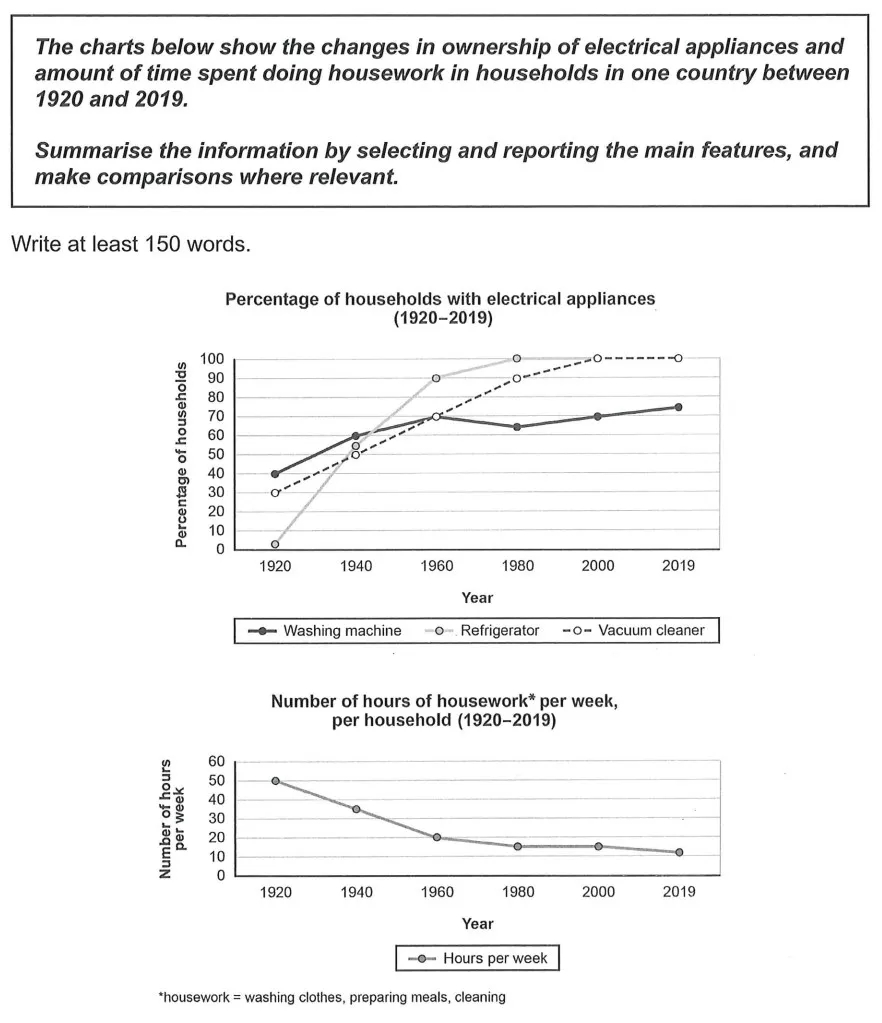
折線圖是雅思考試的常客,但他并不友好,主要是因?yàn)樗麆?dòng)態(tài)的線條讓廣大考生捉摸不透,看的頭昏眼花。
破此題之前,不妨先通過(guò)《劍16》給出的官方低分范文【5分】的評(píng)語(yǔ)來(lái)剖析一下考官對(duì)于標(biāo)準(zhǔn)線圖寫(xiě)作的期待。
1. “ The response focuses on the detail of when the lines on the graph intersect but there is a lack of clarity in these details. The description of the second chart lacks detail. This limits the task achievement.”
如上,考官反復(fù)提到了三遍缺少“details”這個(gè)缺點(diǎn), 并且強(qiáng)調(diào)了這對(duì)于“task achievement” 的得分是息息相關(guān)的。那么什么是所謂的 “details” 呢,一般來(lái)說(shuō),大家只要抓住幾個(gè)點(diǎn)【起點(diǎn),終點(diǎn),交點(diǎn),最高點(diǎn)最低點(diǎn)】,和各條線的趨勢(shì)【也就是上升/下降的幅度】進(jìn)行描述,就能拿到對(duì)應(yīng)分?jǐn)?shù)了。
2.“There is a lack of coherence caused by missing or inaccurate
cohesive features [Over than] and there is repetition [percentage of household | number of hours per week] caused by the lack of cohesion.”
如上,這個(gè)部分的評(píng)論又重復(fù)提到了幾個(gè)玄乎的詞匯的缺失“ coherence” “ cohesive features” 以及 “cohesion” 。究竟是什么的缺失,讓考官如此 “生氣”
其實(shí)這幾個(gè)玄詞大家可以通俗的理解為句子間的銜接詞和代詞的使用, 以及線的分組的合理性。具體怎么做,不妨看下文。
當(dāng)然評(píng)語(yǔ)當(dāng)中還充斥著對(duì)于用詞及語(yǔ)法的 “吐槽”,這里就不一一剖析了,詞匯豐富度及語(yǔ)法多樣性的必要性相信大家都懂。
01
The lines illustrate the changing percentages of the electronic appliances ownership and the weekly time allocated to housework, including washing clothes, preparing meals and cleaning, from 1920 to 2019. Overall, with the proliferation of versatile electrical appliances, people had been living a more convenient life with higher efficiency, which can be mirrored by the ever-decreasing hours spent in addressing domestic trivialities.
? 開(kāi)頭段的改寫(xiě)當(dāng)然是要把原先的句式/用詞變一變,但是想不到同義詞怎么辦?想到了發(fā)現(xiàn)句式還是與原來(lái)差不多怎么辦?于是不妨優(yōu)先考慮將題干的主語(yǔ)替換了,這樣用詞、句式也就自然發(fā)生了改變。
? Overall 段落居然出現(xiàn)在了這里?是的,可以的,畢竟overall 段落是寫(xiě)圖表籠統(tǒng)、宏觀的情況。出現(xiàn)在這里預(yù)告下文內(nèi)容,合理吧。此外,overall的寫(xiě)作可以不必出現(xiàn)增長(zhǎng)下降的趨勢(shì),不妨多用形容詞來(lái)描述數(shù)據(jù)背后的事實(shí)。
02
The ownership of refrigerators and vacuum cleaners had seen massive growth. Specifically, in terms of refrigerators, no household 【描述0%不必要出現(xiàn)具體數(shù)字】 owned it in 1920, but the ownership of them had the sharpest increase compared with that of the remainders. Notably, since 1980, having refrigerators had become commonplace 【好用的形容詞來(lái)描述程度:多】, without no household being no exception 【描述100%不必要出現(xiàn)具體數(shù)字】. While owing vacuum cleaners had not been as popular as owing refrigerators until 2000【又是一個(gè)好用的形容詞體現(xiàn)了程度,同時(shí)通過(guò)比較完成銜接】, the ownership of them also witnessed a substantial growth of 70% 【實(shí)義動(dòng)詞:witness】. Those drastic increases contrasted sharply with the slight one in the ownership of washing machines, from 40% to roughly 63%. 【通過(guò)比較完成銜接】
? 常說(shuō)線圖分組依據(jù)就看上升下降趨勢(shì)即可,那這種全都上升的線怎么辦?答案是按照縱軸的位置分,也就是縱軸位置一開(kāi)始靠下,但后來(lái)居上的分為一部分;一開(kāi)始居上,但后來(lái)居下的分為另外一個(gè)部分。
03
In terms of the weekly hours spent on housework by each household, a dramatic plunge, from 50 hours to 11 hours, happened over the period from 1920 to 1980. In the next 20 years, the figure had been stable, and then the number was taken to a new low (10) by a slight slip.
? 單獨(dú)一條線可太好寫(xiě)啦,但是寫(xiě)的時(shí)候注意:主語(yǔ)的多樣性。
免費(fèi)獲取資料
熱門(mén)搜索: 上海雅思培訓(xùn)哪家好| 上海雅思封閉班| 上海雅思一對(duì)一培訓(xùn)| 雅思全日制培訓(xùn)| 上海新航道| 2022年雅思寫(xiě)作話題題庫(kù)+范文|
熱報(bào)課程
- 雅思課程
| 班級(jí)名稱 | 班號(hào) | 開(kāi)課時(shí)間 | 人數(shù) | 學(xué)費(fèi) | 報(bào)名 |
|---|
免責(zé)聲明
1、如轉(zhuǎn)載本網(wǎng)原創(chuàng)文章,情表明出處
2、本網(wǎng)轉(zhuǎn)載媒體稿件旨在傳播更多有益信息,并不代表同意該觀點(diǎn),本網(wǎng)不承擔(dān)稿件侵權(quán)行為的連帶責(zé)任;
3、如本網(wǎng)轉(zhuǎn)載稿、資料分享涉及版權(quán)等問(wèn)題,請(qǐng)作者見(jiàn)稿后速與新航道聯(lián)系(電話:021-64380066),我們會(huì)第一時(shí)間刪除。
全真模擬測(cè)試


雅思動(dòng)態(tài)

DeepSeekx雅思官方:中國(guó)考生...

制作:每每