托福TPO45閱讀文本+題目+答案
2017/4/13 10:36:11來源:新航道作者:新航道



摘要:上海新航道托福小編發布托福TPO45閱讀本文+答案,希望幫助考生對照文本更好的研究真題,充分備考,爭取理想成績,實現留學夢想。
上海新航道托福小編發布托福TPO45閱讀本文+答案,希望幫助考生對照文本更好的研究真題,充分備考,爭取理想成績,實現留學夢想。
1. Microscopes The Beringia Landscape
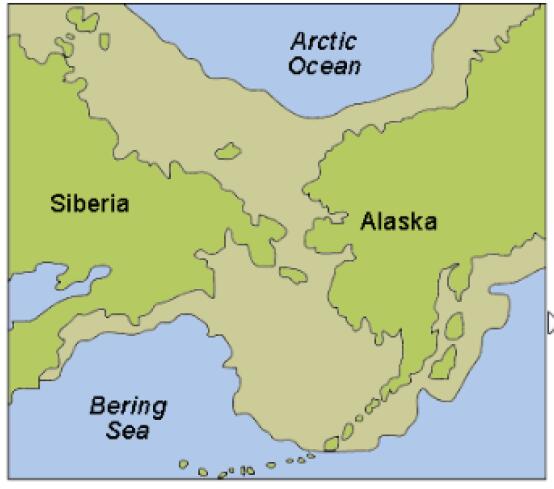
During the peak of the last ice age, northeast Asia (Siberia) and Alaska were connected by a broad land mass called the Bering Land Bridge. This land bridge existed because so much of Earth’s water was frozen in the great ice sheets that sea levels were over 100 meters lower than they are today. Between 25,000 and 10,000 years ago, Siberia, the Bering Land Bndge, and Alaska shared many environmental characteristics. These included a common mammalian fauna of large mammals, a common flora composed of broad grasslands as well as wind-swept dunes and tundra, and a common climate with cold, dry winters and somewhat wanner summers. The recognition that many aspects of the modem flora and fauna were present on both sides of the Bering Sea as remnants of the ice-age landscape led to this region being named Beringia.
It is through Beringia that small groups of large mammal hunters, slowly expanding their hunting territories, eventually colonized North and South America. On this archaeologists generally agree, but that is where the agreement stops One broad area of disagreement in explaining the peopling of the Americas is the domain of paleoecologists, but it is critical to understanding human history: what was Beringia like?
The Beringian landscape was very different from what it is today. ■ Broad, windswept valleys; glaciated mountains; sparse vegetation; and less moisture created a rather forbidding land mass. ■ This land mass supported herds of now-extinct species of mammoth, bison, and horse and somewhat modern versions of caribou, musk ox, elk, and saiga antelope. ■ These grazers supported in turn a number of impressive carnivores, including the giant short-faced bear, the saber-tooth cat, and a large species of lion. ■
The presence of mammal species that require grassland vegetation has led Arctic biologist Dale Guthrie to argue that while cold and dry, there must have been broad areas of dense vegetation to support herds of mammoth, horse, and bison. Further, nearly all of the ice-age fauna had teeth that indicate an adaptation to grasses and sedges; they could not have been supported by a modern flora of mosses and lichens. Guthrie has also demonstrated that the landscape must have been subject to intense and continuous winds, especially in winter. He makes this argument based on the anatomy
of horse and bison, which do not have the ability to search for food through deep snow cover. They need landscapes with strong winds that remove the winter snows, exposing the dry grasses beneath. Guthrie applied the term “ mammoth steppe" to characterize this landscape.
In contrast, Paul Colinvaux has offered a counterargument based on the analysis of pollen in lake sediments dating to the last ice age. He found that the amount of pollen recovered in these sediments is so low that the Beringian landscape during the peak of the last glaciation was more likely to have been what he termed a "polar desert," with little or only sparse vegetation, in no way was it possible that this region could have supported large herds of mammals and thus, human hunters. Guthrie has argued against this view by pointing out that radiocarbon analysis of mammoth, horse, and bison bones from Beringian deposits revealed that the bones date to the period of most intense glaciation.
The argument seemed to be at a standstill until a number of recent studies resulted in a spectacular suite of new finds. The first was the discovery of a 1,000-square-kilometer preserved patch of Beringian vegetation dating to just over 17,000 years ago—the peak of the last ice age The plants were preserved under a thick ash fall from a volcanic eruption. Investigations of the plants found grasses, sedges, mosses, and many other varieties in a nearly continuous cover, as was predicted by Guthrie. But this vegetation had a thin root mat with no soil formation, demonstrating that there was little long-term stability in plant cover, a finding supporting some of the arguments of Colinvaux. A mixture of continuous but thin vegetation supporting herds of large mammals is one that seems plausible and realistic with the available data.
1. The word "remnants" in the passage is closest in meaning
O remains
O evidence
O results
O reminders
2. The word "domain" in the passage is closest in meaning to
O field of expertise
O challenge
O interest
O responsibility
3. According to paragraph 3, all of the following are true of the Beringian landscape EXCEPT.
O There was little vegetation.
O The mammal species there all survived into modern versions.
O The climate was drier than it is today.
O There were mountains with glaciers.
4. The purpose of paragraph 3 is to
O contrast today’s Beringian landscape with other landscapes in the American continent
O describe the Beringian landscape during the last ice age
O explain why so many Beringian species became extinct during the last ice age
O summarize the information about Beringia that historians agree on
5. The word "continuous” in the passage is closest in meaning to
O unpredictable
O very cold
O dangerous
O uninterrupted
6. Which of the sentences below best expresses the essential information in the highlighted sentence in the passage? Incorrect choices change the meaning in important ways or leave out essential information.
O According to biologist Dale Guthrie, mammal species require broad areas of vegetation to survive.
O Dale Guthrie is an Arctic biologist who argued that broad areas of dense vegetation were surely enough to attract mammals such as mammoth, horse, and bison to Beringia.
O Dale Guthrie argued that Beringia, though cold and dry, must have had enough dense vegetation to support the herds of mammoth, horse, and bison that lived there.
O As long as Beringia was cold and dry, argued Dale Guthrie, dense vegetation grew in order to support the herds of mammoth, horse, and bison—the mammal species present there.
7. According to paragraph 4,Guthrie believes that the teeth of ice-age fauna support which of the following conclusions?
O Large mammals would not have been able to survive in the Beringian landscape.
O Grasslands were part of the Beringian landscape.
O Strong winds exposed dry grasses under the snow.
O Horses and bison did not have the ability to search for food through deep snow cover..
8. According to paragraph 4,which of the following statements is true of the relationship between ice- age Benngian animals and their environment?
O When present in sufficient quantities, lichens and mosses provide enough nutrients to satisfy the needs of herds of large mammals.
O The anatomy of certain animals present in that environment provides information about the intensity of winds there at that time.
O The structure of the teeth of most ice-age fauna indicates that they preyed on animals such as the mammoth, horse, and bison.
O Horses and bison are large enough that their feet can easily penetrate deep snow and uncover areas where they can feed on plant material.
9. In paragraph 5, the amount of pollen in Beringian lake sediments from the last ice age is used to explain
O how long the ice age lasted
O how important pollen is as a source of food
O how many different kinds of plants produce pollen
O how little vegetation must have been present at that time
10. According to paragraph 5, how did Dale Guthrie use the information about radiocarbon analysis of bones from Benngian deposits?
O To suggest that Colinvaux should have used different methods to measure the amount of pollen in ice-age lake sediments
O To argue that the large Beringian mammals must have eaten plants that produce little, if any, pollen
O To show that the conclusions that Colinvaux drew from the analysis of pollen in ice-age lake sediments cannot be correct
O To explain why so-called polar deserts are incapable of supporting such large animals as mammoth, horse, and bison
11.11. The word "plausible" in the passage is closest in meaning to
O preferable
O practical
O reasonable
O advantageous
12. Which of the following best describes the organization of paragraph 6 ?
O Two contrasting views are presented, and a study that could decide between them is proposed
O An argument is offered, and reasons both for and against the argument are presented
O A claim is made, and a study supporting the claim is described
O New information is presented, and the information is used to show that two competing explanations can each be seen as correct in some way.
13. Look at the four squares [■] that indicate where the following sentence could be added to the passage.
Nevertheless, large animals managed to survive in Beringia.
Where would the sentence best fit? Click on a square [■] to add the sentence to the passage.
14. Directions: An introductory sentence for a brief summary of the passage is provided below. Complete the summary by selecting the THREE answer choices that express the most important ideas in the passage. Some sentences do not belong in the summary because they express ideas that are not presented in the passage or are minor ideas in the passage. This question is worth 2 points.
Drag your answer choices to the spaces where they belong. To remove an answer
choice, click on it.
To review the passage, click VIEW TEXT
During the last ice age, human hunters pursued large mammals across Beringia, a land whose climatic characteristics have been in dispute.
Answer Choices
Strong evidence indicates that large mammals like mammoth and bison survived in the harsh ice-age Beringian landscape.
Carnivores such as the saber-tooth cat were primarily responsible for the disappearance of the largest of the grazing animals, but the harsh winters caused some grazers to die of starvation.
The discovery that grasses, sedges, and mosses survived under the thick ash from a large volcanic eruption proved that the ice-age Benngian plant cover was extremely resistant to climatic extremes.
Benngian mammals crossed easily from northeastern Asia to Alaska across the Bering Land Bridge, though there are indications that they usually went back to Asia for the brief, but warm, summers.
Analyses of ice-age sediments uncovered very small amounts of pollen, suggesting that Benngia lacked the quantity of vegetation needed to support large herds of mammals.
Recent discoveries suggest that shallow-rooted plants created a fairly continuous cover over ice-age Beringia, though the cover most likely was variable and uncertain in any one location.
2. Wind pollination
Pollen, a powdery substance, which is produced by flowering plants and contains male reproductive cells, is usually carried from plant to plant by insects or birds, but some plants rely on the wind to carry their pollen. Wind pollination is often seen as being primitive and wasteful in costly pollen and yet it is surprisingly common, especially in higher latitudes. Wind is very good at moving pollen a long way; pollen can be blown for hundreds of kilometers, and only birds can get pollen anywhere near as far. The drawback is that wind is obviously unspecific as to where it takes the pollen. It is like trying to get a letter to a friend at the other end of the village by climbing onto the roof and throwing an armful of letters into the air and hoping that one will end up in the friend's garden. For the relatively few dominant tree species that make up temperate forests, where there are many individuals of the same species within pollen range, this is quite a safe gamble. If a number of people in the village were throwing letters off roofs, your friend would be bound to get one. By contrast, in the tropics, where each tree species has few, widely scattered individuals, the chance of wind blowing pollen to another individual is sufficiently slim that animals are a safer bet as transporters of pollen. Even tall trees in the tropics are usually not wind pollinated despite being in windy conditions. In a similar way, trees in temperate forests that are insect pollinated tend to grow as solitary, widely spread individuals.
Since wind-pollinated flowers have no need to attract insects or other animals, they have dispensed with bright petals, nectar, and scent. These are at best a waste and at worst an impediment to the transfer of pollen in the air The result is insignificant-looking flowers and catkins (dense cylindrical clusters of small, petalless flowers).
Wind pollination does, of course, require a lot of pollen. ■ Birch and hazel trees can produce 5.5 and 4 million grains per catkin, respectively. ■There are various adaptations to help as much of the pollen go as far as possible. ■ Most deciduous wind-pollinated trees (which shed their leaves every fall) produce their pollen in the spring while the branches are bare of leaves to reduce the surrounding surfaces that “compete" with the stigmas (the part of the flower that receives the pollen) for pollen. ■ Evergreen conifers, which do not shed their leaves, have less to gain from spring flowering, and, indeed, some flower in the autumn or winter.
Pollen produced higher in the top branches is likely to go farther: it is windier (and gustier) and the pollen can be blown farther before hitting the ground. Moreover, dangling catkins like hazel hold the pollen in until the wind is strong enough to bend them, ensuring that pollen is only shed into the air when the wind is blowing hard. Weather is also important. Pollen is shed primarily when the air is dry to prevent too much sticking to wet surfaces or being knocked out of the air by rain. Despite these adaptations, much of the pollen fails to leave the top branches, and only between 0.5 percent and 40 percent gets more than 100 meters away from the parent. But once this far, significant quantities can go a kilometer or more. Indeed, pollen can travel many thousands of kilometers at high altitudes. Since all this pollen is floating around in the air, it is no wonder that wind-pollinated trees are a major source of allergies.
Once the pollen has been snatched by the wind, the fate of the pollen is
obviously up to the vagaries of the wind, but not everything is left to chance. Windbome pollen is dry, rounded, smooth, and generally smaller than that of insect-pollinated plants. But size is a two-edged sword. Small grains may be blown farther but they are also more prone to be whisked past the waiting stigma because smaller particles tend to stay trapped in the fast-moving air that flows around the stigma. But stigmas create turbulence, which slows the air speed around them and may help pollen stick to them.
1. The word "drawback" in the passage is closest in meaning to
O other side of the issue
O objection
O concern
O problem
2. Which of the following can be inferred from paragraph 1 about pollen production?
O Pollen production requires a significant investment of energy and resources on the part of the plant.
O The capacity to produce pollen in large quantities is a recent development in the evolutionary history of plants.
O Plants in the tropics generally produce more pollen than those in temperate zones.
O The highest levels of pollen production are found in plants that depend on insects or birds to carry their pollen.
3. According to paragraph 1, wind-pollinated trees are most likely to be found
O in temperate forests
O at lower latitudes
O in the tropics
O surrounded by trees of many different species
4. Paragraph 1 supports which of the following as the reason animals are a safer bet than wind as pollinators when the individual trees of a species are widely separated?
O Animals tend to carry pollen from a given flower further than the wind does.
O Animals serve as pollinators even where there is little wind to disperse the pollen.
O An animal that visits a flower is likely to deliberately visit other flowers of the same species and pollinate them.
O Birds and insects fly in all directions, not just the direction the wind is blowing at a given moment.
5. In paragraph 1, the author compares pollen moved by wind with letters thrown off roofs in order to
O explain why there are relatively few species of trees that depend on wind pollination
O compare natural, biological processes with human social practices
O make a point about the probability of wind-blown pollen reaching a tree of the same species
O argue against the common assumption that the tallest trees are the most likely to employ wind pollination
6. Paragraph 2 suggests that wind-pollinated plants do not have bright petals, nectar, and scent for which TWO of the following reasons? To receive credit, you must select TWO answers.
□ They interfere with pollination by wind.
□ They are easily damaged by wind.
□ They are unnecessary.
□ They reduce the amount of pollen that can be produced.
7. The word "respectively” in the passage is closest in meaning to
O over time
O separately
O in that order
O consistently
8.According to paragraph 3, why do most deciduous wind-pollinated trees produce their pollen in the spring?
O To avoid competing with evergreen conifers, which flower in the fall or winter
O So that the leaves of the trees receiving the pollen will not prevent the pollen from reaching the trees' stigmas
O Because they do not have enough energy to produce new leaves and pollen at the same time
O In order to take advantage of the windiest time of year
9. According to paragraph 4,which of the following is NOT an adaptation that helps ensure that pollen travels as far as possible?
O Pollen-producing flowers and catkins are located at or near the top of the tree.
O Trees grow at least 100 meters away from each other.
O Dangling catkins release pollen only when the wind is blowing hard.
O Pollen is not released during rain storms or when the air is damp.
10. The word "significant" in the passage is closest in meaning to
O sufficient
O considerable
O increasing
O small
11. The phrase “no wonder" in the passage is closest in meaning to
O unsurprising
O understandable
O well-known
O unfortunate
12. Which of the sentences below best expresses the essential information in the highlighted sentence in the passage? Incorrect choices change the meaning in important ways or leave out essential information.
O Because smaller particles tend to stay trapped in the fast moving air, they are blown much farther than other grains.
O Smaller particles are trapped by the stigma when fast-moving air flows past it.
O Small particles that are whisked past the waiting stigma gain speed and are often trapped in the fast-moving air.
O While smallness helps pollen travel farther, it also makes it more likely to be blown past the stigma.
13. Look at the four squares [■] that indicate where the following sentence could be added to the passage.
This level of volume is important to ensure that at least some of the pollen reaches target tree, but dispersing the pollen is crucial as well.
Where would the sentence best fit? Click on a square [■] to add the sentence to the passage.
14. Directions: An introductory sentence for a brief summary of the passage is provided below. Complete the summary by selecting the THREE answer choices that express the most important ideas in the passage. Some sentences do not belong in the summary because they express ideas that are not presented in the passage or are minor ideas in the passage. This question is worth 2 points.
Drag your answer choices to the spaces where they belong. To remove an answer choice, click on it.
To review the passage, click VIEW TEXT
Some plants depend on the wind to carry their pollen.
Answer Choices
Because there are few trees in temperate forests, it is safer to transport pollen by insects or birds.
Wind pollination is a safe reproductive strategy for trees in temperate forests where there are only a few dominant species and, therefore, many individuals of the same species.
Wind pollination requires production of a large amount of pollen, which must be
released at the right time and under the right conditions to extend its range.
Most wind-pollinated trees are deciduous because evergreen needles compete with the stigma for pollen, making wind pollination uncertain.
Wind-pollinated plants usually have small petalless flowers which often grow in catkins that produce a very fine-grained pollen.
Wind-pollinated trees must grow in regions that are only moderately windy because strong winds will blow the tiny pollen grains past the stigma.
3. Feeding Strategies in the Ocean
In the open sea, animals can often find food reliably available in particular regions or seasons (e g., in coastal areas in springtime). In these circumstances, animals are neither constrained to get the last calorie out of their diet nor is energy conservation a high priority. In contrast, the food levels in the deeper layers of the ocean are greatly reduced, and the energy constraints on the animals are much more severe To survive at those levels, animals must maximize their energy input, finding and eating whatever potential food source may be present.
In the near-surface layers, there are many large, fast carnivores as well as an immense variety of planktonic animals, which feed on plankton (small, free-floating plants or animals) by filtering them from currents of water that pass through a specialized anatomical structure These filter-feeders thrive in the well-illuminated surface waters because oceans have so many very small organisms, from bacteria to large algae to larval crustaceans. Even fishes can become successful filter-feeders in some circumstances Although the vast majority of marine fishes are carnivores, in near-surface regions of high productivity the concentrations of larger phytoplankton (the plant component of plankton) are sufficient to support huge populations of filter-feeding sardines and anchovies. These small fishes use their gill filaments to strain out the algae that dominate such areas. Sardines and anchovies provide the basis for huge commercial fisheries as well as a food resource for large numbers of local carnivores, particularly seabirds. At a much larger scale, baleen whales and whale sharks are also efficient filter-feeders in productive coastal or polar waters, although their filtered particles comprise small animals such as copepods and krill rather than phytoplankton.
Filtering seawater for its particulate nutritional content can be an energetically demanding method of feeding, particularly when the current of water to be filtered has to be generated by the organism itself, as is the case for all planktonic animals. Particulate organic matter of at least 2.5 micrograms per cubic liter is required to provide a filter-feeding planktonic organism with a net energy gain This value is easily exceeded in most coastal waters, but in the deep sea, the levels of organic matter range from next to nothing to around 7 micrograms per cubic liter. Even though mean levels may mask much higher local concentrations, it is still the case that many deep-sea animals are exposed to conditions in which a normal filter-feeder would starve
There are, therefore, fewer successful filter-feeders in deep water, and some of those that are there have larger filtering systems to cope with the scarcity of particles. Another solution for such animals is to forage in particular layers of water where the particles may be more concentrated. Many of the groups of animals that typify the filter-feeding lifestyle in shallow water have deep-sea representatives that have become predatory. Their filtering systems, which reach such a high degree of development in shallow- water species, are greatly reduced. Alternative methods of active or passive prey capture have been evolved, including trapping and seizing prey, entangling prey, and sticky tentacles.
■ In the deeper waters of the oceans, there is a much greater tendency for animals to await the arrival of food particles or prey rather than to search them out
actively (thus minimizing energy expenditure). ■ This has resulted in a more stealthy style of feeding, with the consequent emphasis on lures and/or the evolution of elongated appendages that increase the active volume of water controlled or monitored by the animal. ■ Another consequence of the limited availability of prey is that many animals have developed ways of coping with much larger food particles, relative to their own body size, than the equivalent shallower species can process. ■ Among the fishes there is a tendency for the teeth and jaws to become appreciably enlarged. In such creatures, not only are the teeth hugely enlarged and/or the jaws elongated but the size of the mouth opening may be greatly increased by making the jaw articulations so flexible that they can be effectively dislocated. Very large or long teeth provide almost no room for cutting the prey into a convenient size for swallowing, the fish must gulp the prey down whole.
1.The word "severe" in the passage is closest in meaning to
O extreme
O complex
O basic
O immediate
2. What can be inferred from paragraph 1 about why energy conservation is not a high priority for ocean animals in coastal waters during the spring?
O Those animals are least active during the spring
O Those animals have a plentiful supply of food
O Those animals have to expend energy to avoid predators.
O Those animals store energy during the colder seasons.
3. What can be inferred from paragraph 2 about fish?
O Most fish feed on plankton.
O Fish tend to avoid well-illuminated areas.
O Most fish species are not filter-feeders.
O Few fish species are successful in the near-surface layers.
4. According to paragraph 2, how do sardines and anchovies obtain food near the surface of the ocean?
O They rely on the large quantities of food resources also available to local carnivores.
O They capture the larvae of some crustaceans.
O They feed on the organisms left over by commercial fisheries.
O They obtain algae by using their gills as filters.
5. In paragraph 1, the author compares pollen moved by wind with letters thrown off roofs in order to
O explain why there are relatively few species of trees that depend on wind pollination
O compare natural, biological processes with human social practices
O make a point about the probability of wind-blown pollen reaching a tree of the same
species
O argue against the common assumption that the tallest trees are the most likely to employ wind pollination
6. Paragraph 2 suggests that wind-pollinated plants do not have bright petals, nectar, and scent for which TWO of the following reasons? To receive credit, you must select TWO answers.
□ They interfere with pollination by wind
□ They are easily damaged by wind.
□ They are unnecessary.
□ They reduce the amount of pollen that can be produced.
7. The word "scarcity" in the passage is closest in meaning to
O speed
O variety
O lack
O size
8. According to paragraph 4,deep-water filter-feeders have adopted all of the following ways to obtain food EXCEPT
O developing larger filtering systems
O capturing prey using sticky tentacles
O swimming up to the surface at feeding time
O searching in ocean layers that contain a substantial amount of particles
9. Why does the author include the information that animals in the deep ocean place an emphasis on lures" and have evolved "elongated appendages”?
O To argue against the view that animals in the deep ocean use more energy to find food than do animals in shallow waters
O To emphasize the importance of an am mars ability to control a large volume of water
O To identify some feeding strategies that animals have developed to minimize their energy expenditure
O To give examples of body structures that help those animals move quickly in deep ocean waters
10. The phrase "coping with" in the passage is closest in meaning to
O Absorbing
O finding
O approaching
O managing
11. The word "flexible" in the passage is closest in meaning to
O huge
O adaptable
O powerful
O precise
12. According to paragraph 5, why do some fish swallow their prey whole?
O Their teeth are too large to allow for cutting prey.
O They have no jaw muscles to allow chewing.
O Swallowing prey whole results in a higher net energy gain.
O Chewing can cause their jaws to dislocate.
13. Look at the four squares [■] that indicate where the following sentence could be added to the passage.
Such a passive approach requires those animals to develop specialized methods of acquiring food.
Where would the sentence best fit? Click on a square [■] to add the sentence to the passage.
14. Directions: An introductory sentence for a brief summary of the passage is provided below Complete the summary by selecting the THREE answer choices that express the most important ideas in the passage Some sentences do not belong in the summary because they express ideas that are not presented in the passage or are minor ideas in the passage This question is worth 2 points.
Drag your answer choices to the spaces where they belong. To remove an answer choice, click on it.
To review the passage, click VIEW TEXT
Ocean animals have developed various strategies for maximizing energy input from food.
Answer Choices
Large carnivores near the ocean surface feed mainly on organic matter left over after it passes through the filters of the filter-feeders.
Even in deep ocean layers where prey is relatively hard to find, filter feeding is still the least energetically-demanding method of obtaining food.
Animals in deeper water have evolved strategies and body structures that allow them to use as little energy as possible in obtaining food.
Near the surface of the water, many animals obtain food by using specialized body parts to filter plankton from the water.
Filter-feeding is more common in shallow water, where there is a higher concentration of organic matter than there is in deeper water.
At deeper ocean levels plankton is relatively rare, requiring animals at those levels to actively search for their food sources.
托福TPO閱讀45文本+題目+答案
閱讀一:1-5.AABBD 6-10.CBBDC 11-13.CDB 14.AEF
閱讀二:1-5.DAACC 6.AC 7-10.BBBB 11-13.ADB 14.BCE
閱讀三:1-5.ABCDD 6-10.DCCCD 11-13.BAB 14.CDE
以上就是小編整理了的托福TPO閱讀45文本+題目+答案,如想要托福TPO閱讀電子版本,請提交:“姓名+郵箱+聯系方式”,我們會盡快發送給您!
免費獲取資料
熱門搜索: 上海托福培訓機構哪個好| 上海托福封閉班| 上海托福培訓| 托福TPO1-74下載| 上海托福住宿班|
免責聲明
1、如轉載本網原創文章,情表明出處
2、本網轉載媒體稿件旨在傳播更多有益信息,并不代表同意該觀點,本網不承擔稿件侵權行為的連帶責任;
3、在本網博客/論壇發表言論者,文責自負。
相關內容
- 托福TPO75口語獨立及綜合題目+范文+音頻下載
- 托福TPO75聽力題目及答案解析+音頻PDF下載
- 托福TPO75寫作題目+聽力音頻(綜合寫作+獨立寫作)
- 托福TPO75閱讀題目+文本及答案解析PDF下載
- 托福TPO72閱讀題目+文本及答案解析PDF下載
- 托福TPO71閱讀題目+文本及答案解析PDF下載
- 托福TPO70閱讀題目+文本及答案解析PDF下載
- 托福TPO69閱讀題目+文本及答案解析PDF下載
- 托福TPO68閱讀題目+文本及答案解析PDF下載
- 托福TPO67閱讀題目+文本及答案解析PDF下載
- 托福TPO66閱讀題目+文本及答案解析PDF下載
- 托福TPO74口語獨立及綜合題目+范文+音頻下載
- 托福TPO73口語獨立及綜合題目+范文+音頻下載
- 托福TPO72口語獨立及綜合題目+范文+音頻下載
熱報課程
- 托福課程
| 班級名稱 | 班號 | 開課時間 | 人數 | 學費 | 報名 |
|---|
全真模擬測試


制作:每每